

Every Twelve Seconds: The Clinical Judgment Demand Nobody Talks About
Date published: June 3, 2026
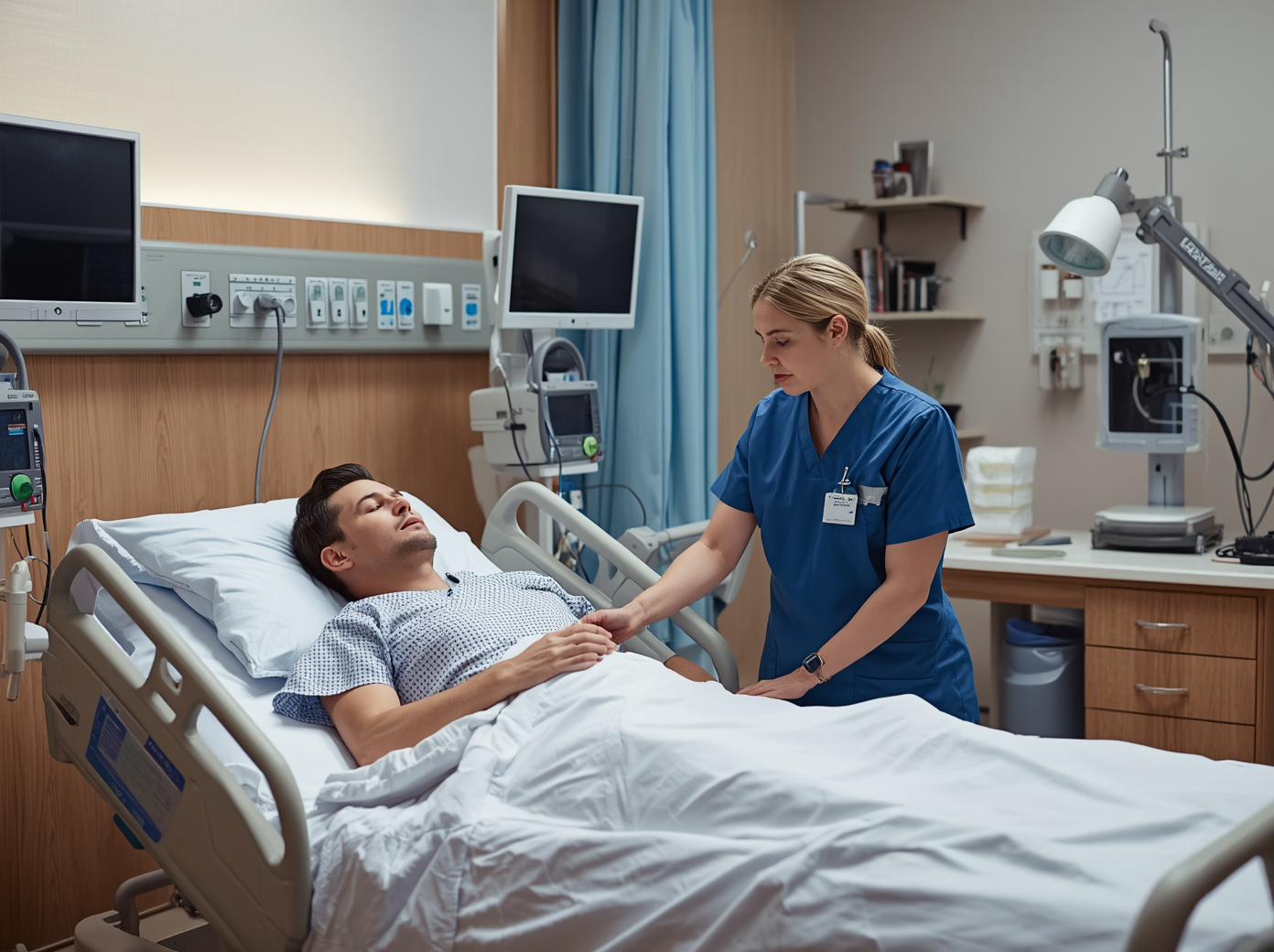
I want to ask you something no one asked me during nursing school — and that I suspect no one has asked most of the nurses reading this.
How many clinical judgment calls do you make in a shift?
Not the dramatic ones. Not the moment you called the rapid response or caught the elevated potassium before it showed up on the monitor. I mean all of them — the ones at the bedside, in the hallway, in the thirty seconds between a patient's daughter voicing her concern and you deciding what to do. The ones that happen so fast you don't think of them as decisions at all. They start at handoff — research shows nurses begin forming judgments about deterioration risk during change-of-shift report — and they don't stop until you give report at the end of the shift.
The NCSBN's own analysis found that clinical judgment is directly linked to more than 46% of nursing practice errors. Nearly half of what goes wrong traces back to a judgment failure: a cue not noticed, a pattern not named, an action not taken in time. And yet — when was the last time someone explicitly taught you how to make those judgments?
Med-Surg Is Where Clinical Judgment Lives
There's a persistent myth that clinical judgment belongs in the ICU or ED. Anyone who has worked a busy med-surg floor knows that's backwards. Higher patient loads, sicker patients, multiple comorbidities, no continuous monitoring — med-surg is where clinical judgment gets its daily workout, without the infrastructure that buys ICU nurses extra seconds.
A 2023 qualitative study of twenty med-surg nurses found that what looks like intuition — knowing something is wrong before the numbers confirm it — is clinical judgment running at full speed. They felt the shift in a patient's affect. They noticed the family was quieter than usual. They caught that a patient who had been asking for pain medication every four hours hadn't asked once in eight. That's not a gift. That's a skill. And it can be taught.
Building the Framework, Not Just Teaching the Content
A 2025 bibliometric analysis of decades of nursing research concluded that widespread improvement in clinical judgment at the bedside remains elusive. The research is growing. The educational interventions are multiplying. But the practice gap — between what nurses can do in school and what a med-surg floor at 2 a.m. requires — hasn't closed. The reason is structural: we've treated clinical judgment as something that develops through experience rather than something that can be taught systematically from day one.
It can. But it requires giving students an explicit framework — not just content to memorize.
Start with this: before entering any patient room, the nurse answers three questions. What is this patient's biggest risk right now? What is the earliest sign that risk is becoming real? What will I do immediately if I see it? These are not documentation prompts. They are a cognitive habit — a shift from reactive care to anticipatory surveillance that begins before the door opens.
Inside the room, every finding runs through four questions: is this expected or unexpected for this patient? Benign or pathological? Chronic or acute? Stable or unstable? These aren't a checklist. They are the structure that converts observation into interpretation — and interpretation into a decision about whether to act, watch, or escalate.
And then — the piece that changes everything — teach nurses to read across systems, not in isolation. A single abnormal finding is a data point. Two findings moving in the same direction are a pattern. Three or more systems moving simultaneously in the same direction are a signature, and every signature has one physiologic cause driving it. The nurse who sees four separate findings generates four explanations. The nurse who sees one signature names the cause and acts. That is the difference between documenting a trend and acting on one — and it is teachable.
What This Means for You
If you're a nursing educator reading this: your students are going to walk onto a med-surg floor and make clinical judgment calls within their first hour. The question isn't whether they'll be asked to judge. The question is whether you've given them a framework for doing it.
If you're a nurse manager or education leader: the nurses on your floors are already doing this work. Your investment in their clinical judgment development isn't optional enrichment — it's the core of patient safety.
And if you're a bedside nurse: the judgment calls you make every shift matter more than any single intervention on your care plan. You are the surveillance system. You are the early warning system. And you deserve to have that work recognized, named, and systematically supported.
How confident are you that your graduates can consistently translate assessment data into accurate clinical judgments at the bedside?
Visit lifebeatsolutions.com to discover how we help nurse educators teach pattern recognition, strengthen clinical judgment, and prepare students to recognize patient deterioration earlier.
Dr. Julie Siemers, DNP, MSN, RN, is the founder of Lifebeat Solutions and creator of the Clinical Judgment & Safety Method™ — a faculty development framework for nursing educators. With 47 years of experience in critical care, flight nursing, and nursing education, her work focuses on closing the gap between how nurses are taught and what clinical practice requires of them.
#ClinicalJudgment #NursingEducation #MedSurgNursing #PatientSafety #ClinicalReasoning
Every Twelve Seconds: The Clinical Judgment Demand Nobody Talks About
Date published: June 3, 2026
I want to ask you something no one asked me during nursing school — and that I suspect no one has asked most of the nurses reading this.
How many clinical judgment calls do you make in a shift?
Not the dramatic ones. Not the moment you called the rapid response or caught the elevated potassium before it showed up on the monitor. I mean all of them — the ones at the bedside, in the hallway, in the thirty seconds between a patient's daughter voicing her concern and you deciding what to do. The ones that happen so fast you don't think of them as decisions at all. They start at handoff — research shows nurses begin forming judgments about deterioration risk during change-of-shift report — and they don't stop until you give report at the end of the shift.
The NCSBN's own analysis found that clinical judgment is directly linked to more than 46% of nursing practice errors. Nearly half of what goes wrong traces back to a judgment failure: a cue not noticed, a pattern not named, an action not taken in time. And yet — when was the last time someone explicitly taught you how to make those judgments?
Med-Surg Is Where Clinical Judgment Lives
There's a persistent myth that clinical judgment belongs in the ICU or ED. Anyone who has worked a busy med-surg floor knows that's backwards. Higher patient loads, sicker patients, multiple comorbidities, no continuous monitoring — med-surg is where clinical judgment gets its daily workout, without the infrastructure that buys ICU nurses extra seconds.
A 2023 qualitative study of twenty med-surg nurses found that what looks like intuition — knowing something is wrong before the numbers confirm it — is clinical judgment running at full speed. They felt the shift in a patient's affect. They noticed the family was quieter than usual. They caught that a patient who had been asking for pain medication every four hours hadn't asked once in eight. That's not a gift. That's a skill. And it can be taught.
Building the Framework, Not Just Teaching the Content
A 2025 bibliometric analysis of decades of nursing research concluded that widespread improvement in clinical judgment at the bedside remains elusive. The research is growing. The educational interventions are multiplying. But the practice gap — between what nurses can do in school and what a med-surg floor at 2 a.m. requires — hasn't closed. The reason is structural: we've treated clinical judgment as something that develops through experience rather than something that can be taught systematically from day one.
It can. But it requires giving students an explicit framework — not just content to memorize.
Start with this: before entering any patient room, the nurse answers three questions. What is this patient's biggest risk right now? What is the earliest sign that risk is becoming real? What will I do immediately if I see it? These are not documentation prompts. They are a cognitive habit — a shift from reactive care to anticipatory surveillance that begins before the door opens.
Inside the room, every finding runs through four questions: is this expected or unexpected for this patient? Benign or pathological? Chronic or acute? Stable or unstable? These aren't a checklist. They are the structure that converts observation into interpretation — and interpretation into a decision about whether to act, watch, or escalate.
And then — the piece that changes everything — teach nurses to read across systems, not in isolation. A single abnormal finding is a data point. Two findings moving in the same direction are a pattern. Three or more systems moving simultaneously in the same direction are a signature, and every signature has one physiologic cause driving it. The nurse who sees four separate findings generates four explanations. The nurse who sees one signature names the cause and acts. That is the difference between documenting a trend and acting on one — and it is teachable.
What This Means for You
If you're a nursing educator reading this: your students are going to walk onto a med-surg floor and make clinical judgment calls within their first hour. The question isn't whether they'll be asked to judge. The question is whether you've given them a framework for doing it.
If you're a nurse manager or education leader: the nurses on your floors are already doing this work. Your investment in their clinical judgment development isn't optional enrichment — it's the core of patient safety.
And if you're a bedside nurse: the judgment calls you make every shift matter more than any single intervention on your care plan. You are the surveillance system. You are the early warning system. And you deserve to have that work recognized, named, and systematically supported.
How confident are you that your graduates can consistently translate assessment data into accurate clinical judgments at the bedside?
Visit lifebeatsolutions.com to discover how we help nurse educators teach pattern recognition, strengthen clinical judgment, and prepare students to recognize patient deterioration earlier.
Dr. Julie Siemers, DNP, MSN, RN, is the founder of Lifebeat Solutions and creator of the Clinical Judgment & Safety Method™ — a faculty development framework for nursing educators. With 47 years of experience in critical care, flight nursing, and nursing education, her work focuses on closing the gap between how nurses are taught and what clinical practice requires of them.
#ClinicalJudgment #NursingEducation #MedSurgNursing #PatientSafety #ClinicalReasoning
Monitoring and Reporting
Collecting and analyzing data on safety incidents to identify trends and areas for improvement.
Establishing Standards
Developing and enforcing safety protocols to ensure consistency and quality across healthcare organizations.
Promoting Education
Providing training and resources to healthcare professionals to enhance their knowledge and skills in patient safety.
Encouraging Transparency
Creating a culture where healthcare workers feel empowered to report errors and near-misses without fear of retribution.

Driving Innovation
Leveraging technology and research to implement cutting-edge solutions for patient safety challenges.
FOLLOW US


Copyright 2025. All rights reserved
FOLLOW US
FOLLOW US