

Everyone's Measuring Clinical Judgment. Physiologic Frameworks Actually Teach It
Date published: July 23, 2026
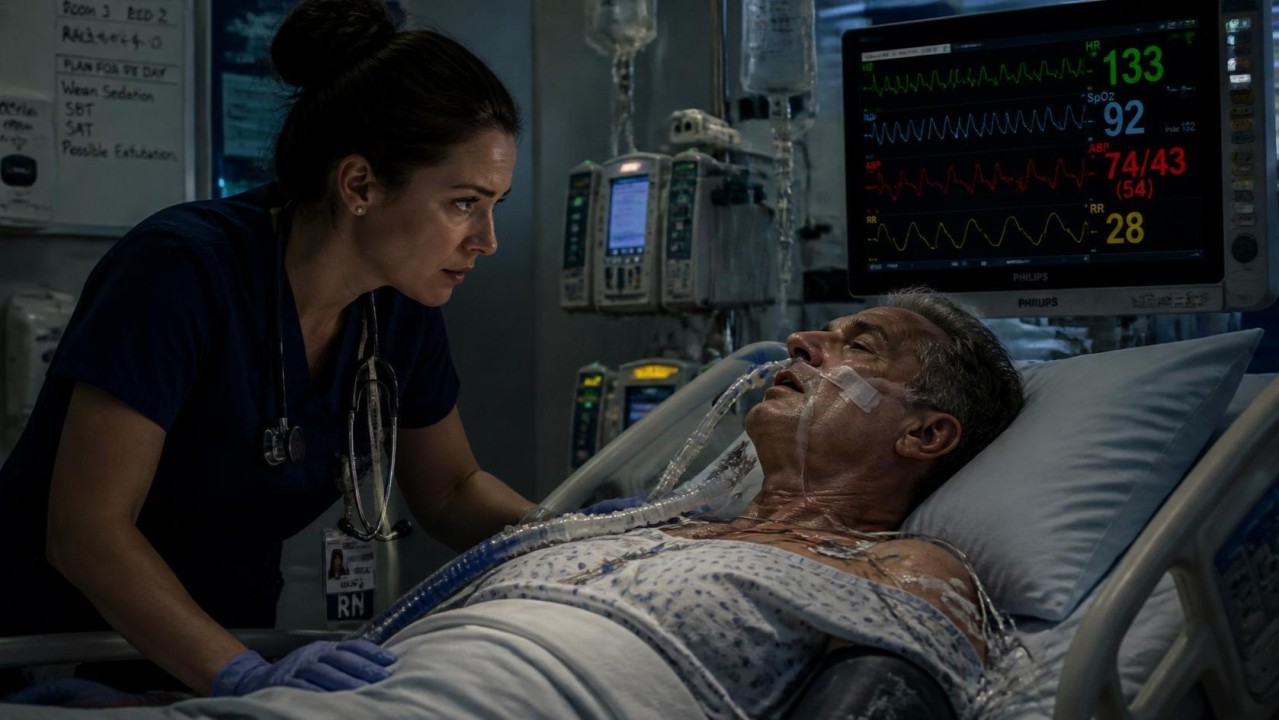
Clinical judgment has a foundation we stopped teaching and it is the difference between a nurse who notices a number and one who rescues a patient.
The Next Generation NCLEX Clinical Judgment Measurement Model made "recognize cues" the first action of clinical judgment. It was the right move. Clinical judgment is the work of nursing, and the profession finally built a measurement model to hold it up to the light.
But there is a quiet assumption buried in that first step. A cue is only a cue if you understand what it points to. A heart rate of 118 is a number. Whether it is a warning depends entirely on whether the nurse can trace it back to a mechanism is this a rate problem, a volume problem, or the earliest sign of something upstream? Recognition without physiology is just noticing. And noticing is not judgment.
That gap is exactly what I built the Physiologic Concept Frameworks to close.
The Problem We Inherited
For decades, nursing education has been organized around diseases. Students learn that pneumonia presents one way, heart failure another, sepsis another still. It produces graduates who can match a textbook presentation to a textbook diagnosis right up until the patient in front of them has not read the textbook.
Jean Giddens' work on concept-based nursing education and content saturation named this problem years ago: content saturation crowds out the deep, transferable understanding that clinical reasoning actually requires. Facts taught in isolation do not transfer. Concepts do.
Christine Tanner's model of clinical judgment tells us clinical judgment begins with noticing and interpreting. But you cannot interpret a finding without a mental model of what should be happening in the first place. Interpretation requires a baseline a picture of the intact pathway so the nurse can see where it broke.
And Patricia Benner's Novice to Expert model, the backbone of my own graduate research, showed us that expertise is fundamentally pattern recognition: the expert nurse grasps a situation as a whole and moves straight to the region of the problem. The catch is that novices do not have patterns yet. We cannot hand a student twenty years of experience. But we can hand them the pathway that experience eventually reveals.
What a Physiologic Framework Actually Is
A physiologic framework traces the sequence a body system must complete to function and names what failure looks like at each step.
Take oxygenation. It is not one thing; it is a pathway: airway patency, then gas exchange at the alveoli, then transport by hemoglobin, then utilization at the cell. Four nodes.
Now an SpO₂ of 98% in an ashen, tachycardic patient stops being a contradiction and becomes a question with an address: saturation is fine, so the failure is downstream a transport problem, not a gas-exchange problem. The student is not guessing the diagnosis. They are locating the breakdown.
That is the shift. When a student understands the pathway, they can reason about where the system failed regardless of which diagnosis is attached to it. The same four nodes carry them from pneumonia in fundamentals to septic shock in critical care. One framework, installed once, compounds across the entire curriculum.
Why This Is a Patient-Safety Issue, Not an Academic One
Failure to rescue the death of a patient after a complication that timely recognition could have interrupted is rarely a failure of effort. It is a failure of recognition.
Most patients who deteriorate signal it first, in the vital signs, hours before they crash. The nurse who can tell a gas-exchange failure from a cellular one who can spot the patient who "looks better" but is quietly decompensating is the nurse who calls it early.
Frameworks are not a teaching convenience. They are the cognitive infrastructure of rescue.
The Part No One Else Is Teaching
There is no shortage of clinical-judgment products. There are measurement models, question banks, simulation rubrics. What is missing is the layer underneath all of them: the physiology that makes a cue mean something.
Measurement tells you what to assess. A framework tells you how to think.
I have not found another program that teaches clinical judgment from the physiologic pathway up eleven frameworks, spanning acute deterioration, cascading risk, and prevention as the foundation everything else is built on.
Not a supplement to the NCJMM. The floor it stands on.
That foundation is the heart of the Clinical Judgment & Safety Method™ Faculty Academy. If you teach clinical judgment and you have felt the distance between "recognize cues" and students who can actually reason through a deteriorating patient, this is the missing piece.
Explore the Physiologic Frameworks and join the Faculty Academy: https://lifebeatsolutions.com/membership
#ClinicalJudgment #NursingEducation #PatientSafety #ClinicalReasoning #NurseEducators
FOLLOW US


Copyright 2025. All rights reserved
FOLLOW US
FOLLOW US
Copyright 2025. All rights reserved
Everyone's Measuring Clinical Judgment. Physiologic Frameworks Actually Teach It
Date published: July 23, 2026
Clinical judgment has a foundation we stopped teaching and it is the difference between a nurse who notices a number and one who rescues a patient.
The Next Generation NCLEX Clinical Judgment Measurement Model made "recognize cues" the first action of clinical judgment. It was the right move. Clinical judgment is the work of nursing, and the profession finally built a measurement model to hold it up to the light.
But there is a quiet assumption buried in that first step. A cue is only a cue if you understand what it points to. A heart rate of 118 is a number. Whether it is a warning depends entirely on whether the nurse can trace it back to a mechanism is this a rate problem, a volume problem, or the earliest sign of something upstream? Recognition without physiology is just noticing. And noticing is not judgment.
That gap is exactly what I built the Physiologic Concept Frameworks to close.
The Problem We Inherited
For decades, nursing education has been organized around diseases. Students learn that pneumonia presents one way, heart failure another, sepsis another still. It produces graduates who can match a textbook presentation to a textbook diagnosis right up until the patient in front of them has not read the textbook.
Jean Giddens' work on concept-based nursing education and content saturation named this problem years ago: content saturation crowds out the deep, transferable understanding that clinical reasoning actually requires. Facts taught in isolation do not transfer. Concepts do.
Christine Tanner's model of clinical judgment tells us clinical judgment begins with noticing and interpreting. But you cannot interpret a finding without a mental model of what should be happening in the first place. Interpretation requires a baseline a picture of the intact pathway so the nurse can see where it broke.
And Patricia Benner's Novice to Expert model, the backbone of my own graduate research, showed us that expertise is fundamentally pattern recognition: the expert nurse grasps a situation as a whole and moves straight to the region of the problem.
The catch is that novices do not have patterns yet. We cannot hand a student twenty years of experience. But we can hand them the pathway that experience eventually reveals.
What a Physiologic Framework Actually Is
A physiologic framework traces the sequence a body system must complete to function and names what failure looks like at each step.
Take oxygenation. It is not one thing; it is a pathway: airway patency, then gas exchange at the alveoli, then transport by hemoglobin, then utilization at the cell. Four nodes.
Now an SpO₂ of 98% in an ashen, tachycardic patient stops being a contradiction and becomes a question with an address: saturation is fine, so the failure is downstream a transport problem, not a gas-exchange problem. The student is not guessing the diagnosis. They are locating the breakdown.
That is the shift. When a student understands the pathway, they can reason about where the system failed regardless of which diagnosis is attached to it. The same four nodes carry them from pneumonia in fundamentals to septic shock in critical care. One framework, installed once, compounds across the entire curriculum.
Why This Is a Patient-Safety Issue, Not an Academic One
Failure to rescue the death of a patient after a complication that timely recognition could have interrupted is rarely a failure of effort. It is a failure of recognition.
Most patients who deteriorate signal it first, in the vital signs, hours before they crash. The nurse who can tell a gas-exchange failure from a cellular one who can spot the patient who "looks better" but is quietly decompensating is the nurse who calls it early.
Frameworks are not a teaching convenience. They are the cognitive infrastructure of rescue.
The Part No One Else Is Teaching
There is no shortage of clinical-judgment products. There are measurement models, question banks, simulation rubrics. What is missing is the layer underneath all of them: the physiology that makes a cue mean something.
Measurement tells you what to assess. A framework tells you how to think.
I have not found another program that teaches clinical judgment from the physiologic pathway up eleven frameworks, spanning acute deterioration, cascading risk, and prevention as the foundation everything else is built on.
Not a supplement to the NCJMM. The floor it stands on.
That foundation is the heart of the Clinical Judgment & Safety Method™ Faculty Academy. If you teach clinical judgment and you have felt the distance between "recognize cues" and students who can actually reason through a deteriorating patient, this is the missing piece.
Explore the Physiologic Frameworks and join the Faculty Academy: https://lifebeatsolutions.com/membership
#ClinicalJudgment #NursingEducation #PatientSafety #ClinicalReasoning #NurseEducators
Monitoring and Reporting
Collecting and analyzing data on safety incidents to identify trends and areas for improvement.
Establishing Standards
Developing and enforcing safety protocols to ensure consistency and quality across healthcare organizations.
Promoting Education
Providing training and resources to healthcare professionals to enhance their knowledge and skills in patient safety.
Encouraging Transparency
Creating a culture where healthcare workers feel empowered to report errors and near-misses without fear of retribution.

Driving Innovation
Leveraging technology and research to implement cutting-edge solutions for patient safety challenges.