

The Unfolding Case Study Is Not the Point. What You Do With It Is. (Part 1 of 2)
Date published: May 7, 2026

I have watched faculty run the same unfolding case study two different ways with two different groups of students.
One group left knowing what happened to the patient.
The other group left knowing how to think about the next one.
The case was identical. The patient, the clinical findings, the trajectory, the outcome — all the same. What was different was what the faculty member did before the first data point was revealed, at the moment students had to commit to a judgment, and in the fifteen minutes after the outcome was shown.
Those three moments are where clinical judgment either gets built or gets bypassed. And most of the time, in most classrooms, they are bypassed — not from carelessness, but because nobody has ever shown faculty what to do there.
The Unfolding Structure Is Necessary But Not Sufficient
The nursing education community has largely accepted that unfolding case studies are superior to traditional static cases. The research supports this. When information arrives sequentially — the way it does at the bedside — students are required to reason in real time rather than sort pre-organized data. The cognitive demand is higher. The learning is deeper.
But the structure alone does not produce clinical judgment. A well-written unfolding case in the hands of a faculty member asking the wrong questions produces roughly the same outcome as a traditional case: students move through the material, confirm correct answers, and leave having practiced recognition rather than reasoning.
Here is the distinction that matters. Recognition asks: what is wrong with this patient? Reasoning asks: what does this combination of findings mean for this specific patient, right now, given what I knew four hours ago — and what do I do before I have certainty?
The unfolding structure creates the conditions for reasoning. The Socratic questioning sequence is what activates it. Without the right questions at the right moments, the case is a lecture with a patient attached.
The Three Moments That Determine Whether Deep Learning Happens
There are three specific decision points in any unfolding case study where the faculty member either builds clinical judgment or inadvertently closes the door to it.
The first is before any data is revealed. Most faculty skip this moment entirely — they move directly to the case. But this is where the most important cognitive work begins. Before your students see a single vital sign, ask them: based only on the patient header, what is this patient's biggest risk right now? What is the earliest sign you would watch for? What would you do immediately if you saw it?
This is not a quiz. It is a pre-commitment. When students commit to answers before data arrives, their brains are primed to integrate incoming information rather than simply receive it. The student who named respiratory depression as the biggest risk before seeing the clinical picture will see the declining respiratory rate at 2300 differently than the student who encountered it cold. The pre-brief is not preparation for the case. It is the beginning of the reasoning.
The second moment is the decision point — the place in the case where you stop revealing information and require students to act on what they have. The question here is not "what should the nurse do?" That is a performance question. It retrieves protocol. The question is: "Based only on what you know right now — before the picture is complete — what is your clinical judgment, and what specifically tells you that?" Students must commit out loud, to a specific position, with incomplete information. That is what clinical practice actually looks like. The discomfort of that moment is not a problem to resolve. It is the mechanism of learning.
The third moment is the debrief. Most post-case debriefs ask what happened and whether the actions were correct. These are performance debriefs. They correct behavior. They do not build reasoning.
The question that changes everything in a debrief is this: "At what point in this patient's story did the window open — and when did it close?"
That question reframes failure-to-rescue not as an event but as a process. It asks students to locate the earliest moment a prepared nurse could have acted — which is almost always earlier than they thought. It makes the compensation phase visible. It names the upstream signal that was present and available and missed. And it gives students something transferable: not the right answer to this case, but a cognitive habit they carry into the next patient encounter.
In Part 2, I'll show you exactly what the right questions sound like at each of these three moments — and walk through a specific clinical scenario that demonstrates why the difference between evaluative and developmental questioning determines whether a case study builds recognition or reasoning.
Dr. Julie Siemers, DNP, RN, is the founder of Lifebeat Solutions and creator of the Patient Safety Standard™ curriculum and the Clinical Judgment & Safety Method™ Faculty Academy, with 46 years of clinical and nursing education leadership experience and doctoral research focused on failure-to-rescue prevention.
Want to see what teaching clinical judgment looks like in practice? Visit lifebeatsolutions.com — and let's build the nurses our patients need.
#ClinicalJudgment #NursingEducation #PatientSafety #NurseEducators #HealthcareEducation
The Unfolding Case Study Is Not the Point. What You Do With It Is. (Part 1 of 2)
Date published: May 7, 2026
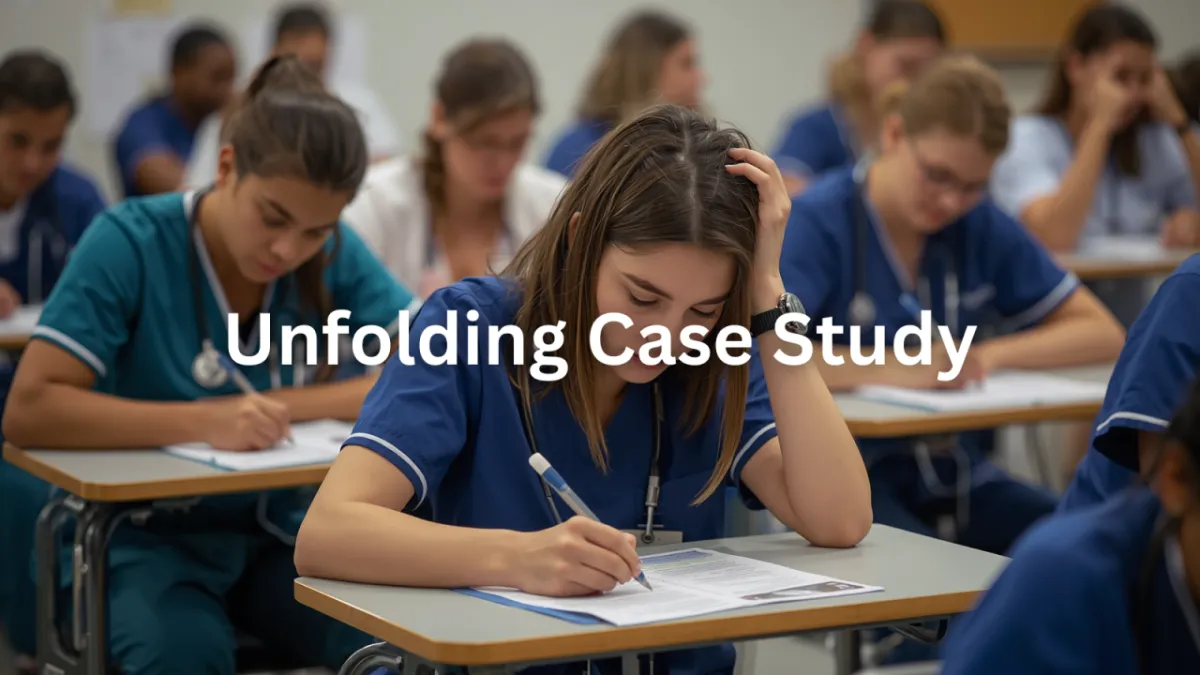
I have watched faculty run the same unfolding case study two different ways with two different groups of students.
One group left knowing what happened to the patient.
The other group left knowing how to think about the next one.
The case was identical. The patient, the clinical findings, the trajectory, the outcome — all the same. What was different was what the faculty member did before the first data point was revealed, at the moment students had to commit to a judgment, and in the fifteen minutes after the outcome was shown.
Those three moments are where clinical judgment either gets built or gets bypassed. And most of the time, in most classrooms, they are bypassed — not from carelessness, but because nobody has ever shown faculty what to do there.
The Unfolding Structure Is Necessary But Not Sufficient
The nursing education community has largely accepted that unfolding case studies are superior to traditional static cases. The research supports this. When information arrives sequentially — the way it does at the bedside — students are required to reason in real time rather than sort pre-organized data. The cognitive demand is higher. The learning is deeper.
But the structure alone does not produce clinical judgment. A well-written unfolding case in the hands of a faculty member asking the wrong questions produces roughly the same outcome as a traditional case: students move through the material, confirm correct answers, and leave having practiced recognition rather than reasoning.
Here is the distinction that matters. Recognition asks: what is wrong with this patient? Reasoning asks: what does this combination of findings mean for this specific patient, right now, given what I knew four hours ago — and what do I do before I have certainty?
The unfolding structure creates the conditions for reasoning. The Socratic questioning sequence is what activates it. Without the right questions at the right moments, the case is a lecture with a patient attached.
The Three Moments That Determine Whether Deep Learning Happens
There are three specific decision points in any unfolding case study where the faculty member either builds clinical judgment or inadvertently closes the door to it.
The first is before any data is revealed. Most faculty skip this moment entirely — they move directly to the case. But this is where the most important cognitive work begins. Before your students see a single vital sign, ask them: based only on the patient header, what is this patient's biggest risk right now? What is the earliest sign you would watch for? What would you do immediately if you saw it?
This is not a quiz. It is a pre-commitment. When students commit to answers before data arrives, their brains are primed to integrate incoming information rather than simply receive it. The student who named respiratory depression as the biggest risk before seeing the clinical picture will see the declining respiratory rate at 2300 differently than the student who encountered it cold. The pre-brief is not preparation for the case. It is the beginning of the reasoning.
The second moment is the decision point — the place in the case where you stop revealing information and require students to act on what they have. The question here is not "what should the nurse do?" That is a performance question. It retrieves protocol. The question is: "Based only on what you know right now — before the picture is complete — what is your clinical judgment, and what specifically tells you that?" Students must commit out loud, to a specific position, with incomplete information. That is what clinical practice actually looks like. The discomfort of that moment is not a problem to resolve. It is the mechanism of learning.
The third moment is the debrief. Most post-case debriefs ask what happened and whether the actions were correct. These are performance debriefs. They correct behavior. They do not build reasoning.
The question that changes everything in a debrief is this: "At what point in this patient's story did the window open — and when did it close?"
That question reframes failure-to-rescue not as an event but as a process. It asks students to locate the earliest moment a prepared nurse could have acted — which is almost always earlier than they thought. It makes the compensation phase visible. It names the upstream signal that was present and available and missed. And it gives students something transferable: not the right answer to this case, but a cognitive habit they carry into the next patient encounter.
In Part 2, I'll show you exactly what the right questions sound like at each of these three moments — and walk through a specific clinical scenario that demonstrates why the difference between evaluative and developmental questioning determines whether a case study builds recognition or reasoning.
Dr. Julie Siemers, DNP, RN, is the founder of Lifebeat Solutions and creator of the Patient Safety Standard™ curriculum and the Clinical Judgment & Safety Method™ Faculty Academy, with 46 years of clinical and nursing education leadership experience and doctoral research focused on failure-to-rescue prevention.
Want to see what teaching clinical judgment looks like in practice? Visit lifebeatsolutions.com — and let's build the nurses our patients need.
#ClinicalJudgment #NursingEducation #PatientSafety #NurseEducators #HealthcareEducation
Monitoring and Reporting
Collecting and analyzing data on safety incidents to identify trends and areas for improvement.
Establishing Standards
Developing and enforcing safety protocols to ensure consistency and quality across healthcare organizations.
Promoting Education
Providing training and resources to healthcare professionals to enhance their knowledge and skills in patient safety.
Encouraging Transparency
Creating a culture where healthcare workers feel empowered to report errors and near-misses without fear of retribution.

Driving Innovation
Leveraging technology and research to implement cutting-edge solutions for patient safety challenges.
FOLLOW US


Copyright 2025. All rights reserved
FOLLOW US
FOLLOW US