

They Knew the Answer. They Still Froze
September 1, 2026
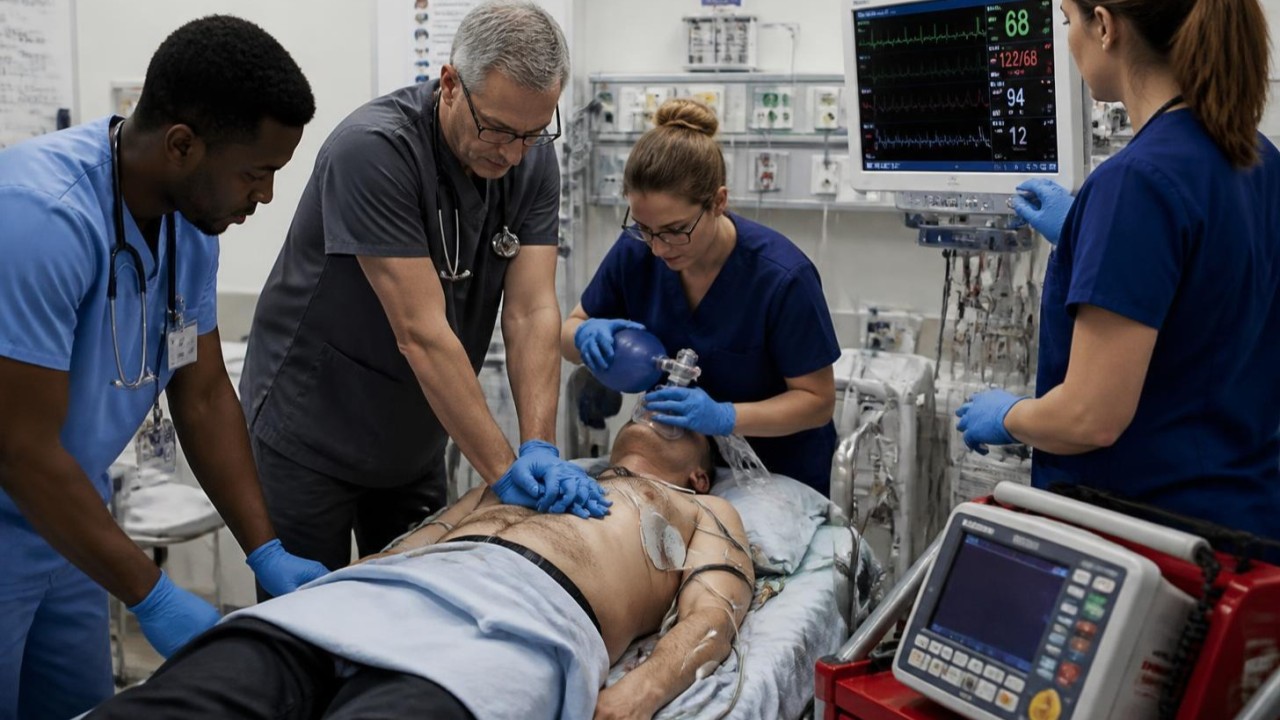
Your student arrived at clinical this morning having been taught.
He watched the lecture. He completed the case study. He passed the quiz. He can tell you what sepsis is. He can list the early signs of respiratory compromise. He can describe the pathophysiology of a deteriorating patient with real accuracy.
Then he walked into room 412 and froze.
Not because he forgot. Because knowing something in a classroom and using it at a real bedside are two different cognitive acts. The first requires recall. The second requires recognition under time pressure, environmental noise, competing demands, and genuine uncertainty about what is happening to this specific patient right now.
That gap has a name, and naming it changes what we do about it.
Transfer is not automatic
Transfer is the ability to apply what was learned in one context to a new context that does not look like the one where the learning happened. A classroom. A simulation lab. A case study with the answer at the back.
The bedside is never an exact replica of the teaching context. Which means transfer has to be built deliberately - and if it is not, the knowledge stays where it was learned. Recallable in a quiet room resembling the room where it was acquired. Unavailable at 0200 on an unfamiliar floor.
This is the part worth sitting with: a student can hold every fact required and still be unable to act. Not from carelessness. Not from a gap in content. From a gap in transfer.
We have been measuring the consequence for twenty years
Practice-readiness in new graduates was measured at roughly 35% in 2005 and 23% by 2017. By 2021 it was 9%. Across that same window, nursing programs added content, added simulation hours, added competency requirements.
The same study reports what the failures actually were. Across more than 5,000 new graduates assessed between 2016 and 2020, 29% failed to recognize urgency or a change in a patient’s condition, and 57% showed gaps in managing patient problems - including selecting the right intervention and communicating relevant data to the provider.
Recognize. Act. Communicate. Those are the three failure points of failure to rescue, and they were measured before these nurses had finished hospital orientation.
It is also worth noting when the decline happened. Year over year, the share of new graduates assessing in the acceptable range fell from 23% in 2015 to 21%, then 17%, then 15%, then 11% by 2019. Every one of those years is before the pandemic.
More content did not produce more capable nurses. If it had, the trend would run the other way.
And the consequence is not academic. Failure to rescue - a patient deteriorating without recognition, action, or communication - is the clinical name for a transfer failure. When we ask experienced nurses which point in that chain they have personally lived, almost nobody names recognition. They name action. They knew. They felt it. They waited, because they could not articulate the concern precisely enough to feel entitled to escalate it.
Nobody ever taught them that “something is wrong, and I cannot name it yet” is itself a clinical finding.
The exam already moved
Next Generation NCLEX launched in 2023, built on the Clinical Judgment Measurement Model to test reasoning under uncertainty rather than recall. That is a transfer test. It asks whether a candidate can recognize cues, prioritize hypotheses, and act when the picture is ambiguous.
The exam moved. Most curricula did not. Which is why students who were taught for content coverage meet a judgment exam and experience it as an ambush - and then meet a real patient and experience the same thing.
What actually builds transfer
Transfer is not a personality trait and it is not seniority. It is built by three conditions, and all three are things faculty control:
• Variability. Practice across many different presentations of the same underlying concept, rather than one canonical case. A student who has met impaired gas exchange in six different patients recognizes the seventh. A student who has met pneumonia only recognizes pneumonia.
• Commitment under uncertainty. The student has to decide before the answer arrives. A case that reveals the outcome before asking for a decision has trained reading comprehension, not judgment.
• Retrieval rather than recognition. Pulling an answer from memory strengthens it in a way that selecting from options never does. This is why asking before telling is not a teaching style preference - it is how memory is physically laid down, and it is increasingly well studied in nursing specifically.
None of those require new content. All three require changing what happens after the content is delivered.
There is one more finding worth sitting with. A scoping review of transfer research in nursing and medicine examined 61 studies of clinical decision-making after simulation. Only seven of them - 11% - assessed whether the learning transferred to actual clinical practice. The other 89% measured transfer to another simulation.
We are not only failing to build transfer. We are mostly not measuring whether it happened.
Where it gets built - or lost
The clinical environment is the highest-yield place transfer can be built, and the most commonly wasted. A student is standing next to a real patient with an unscripted presentation, real time pressure, and real consequences. There is no better teaching material anywhere in nursing education.
And in most programs, that student is supervised rather than taught. The tasks get checked. The findings get charted. The shift ends. The extraordinary material the patient represented was never activated.
The fix is not more time. It is ninety seconds before the door opens: what is this patient's biggest risk right now, what is the earliest sign you would see that the risk is becoming real, and what will you do immediately if you see it? Three questions, answered out loud, before the student has touched the patient.
The student then walks in with a hypothesis instead of a task list. And a student who walks in with a hypothesis is practicing transfer, whether or not the hypothesis turns out to be right.
The question worth sitting with
If your students can pass your exam and still freeze in room 412, the problem was never how much they knew.
It was that nobody built the bridge between the room where they learned it and the room where they need it.
What are you doing in the next two weeks that builds that bridge?
Take a look: https://lifebeatsolutions.com/
#NursingEducation #ClinicalJudgment #NurseEducators #NursingStudents #PatientSafety
They Knew the Answer. They Still Froze
September 1, 2026

Your student arrived at clinical this morning having been taught.
He watched the lecture. He completed the case study. He passed the quiz. He can tell you what sepsis is. He can list the early signs of respiratory compromise. He can describe the pathophysiology of a deteriorating patient with real accuracy.
Then he walked into room 412 and froze.
Not because he forgot. Because knowing something in a classroom and using it at a real bedside are two different cognitive acts. The first requires recall. The second requires recognition under time pressure, environmental noise, competing demands, and genuine uncertainty about what is happening to this specific patient right now.
That gap has a name, and naming it changes what we do about it.
Transfer is not automatic
Transfer is the ability to apply what was learned in one context to a new context that does not look like the one where the learning happened. A classroom. A simulation lab. A case study with the answer at the back.
The bedside is never an exact replica of the teaching context. Which means transfer has to be built deliberately - and if it is not, the knowledge stays where it was learned. Recallable in a quiet room resembling the room where it was acquired. Unavailable at 0200 on an unfamiliar floor.
This is the part worth sitting with: a student can hold every fact required and still be unable to act. Not from carelessness. Not from a gap in content. From a gap in transfer.
We have been measuring the consequence for twenty years
Practice-readiness in new graduates was measured at roughly 35% in 2005 and 23% by 2017. By 2021 it was 9%. Across that same window, nursing programs added content, added simulation hours, added competency requirements.
The same study reports what the failures actually were. Across more than 5,000 new graduates assessed between 2016 and 2020, 29% failed to recognize urgency or a change in a patient’s condition, and 57% showed gaps in managing patient problems - including selecting the right intervention and communicating relevant data to the provider.
Recognize. Act. Communicate. Those are the three failure points of failure to rescue, and they were measured before these nurses had finished hospital orientation.
It is also worth noting when the decline happened. Year over year, the share of new graduates assessing in the acceptable range fell from 23% in 2015 to 21%, then 17%, then 15%, then 11% by 2019. Every one of those years is before the pandemic.
More content did not produce more capable nurses. If it had, the trend would run the other way.
And the consequence is not academic. Failure to rescue - a patient deteriorating without recognition, action, or communication - is the clinical name for a transfer failure. When we ask experienced nurses which point in that chain they have personally lived,
almost nobody names recognition. They name action. They knew. They felt it. They waited, because they could not articulate the concern precisely enough to feel entitled to escalate it.
Nobody ever taught them that “something is wrong, and I cannot name it yet” is itself a clinical finding.
The exam already moved
Next Generation NCLEX launched in 2023, built on the Clinical Judgment Measurement Model to test reasoning under uncertainty rather than recall. That is a transfer test. It asks whether a candidate can recognize cues, prioritize hypotheses, and act when the picture is ambiguous.
The exam moved. Most curricula did not. Which is why students who were taught for content coverage meet a judgment exam and experience it as an ambush - and then meet a real patient and experience the same thing.
What actually builds transfer
Transfer is not a personality trait and it is not seniority. It is built by three conditions, and all three are things faculty control:
• Variability. Practice across many different presentations of the same underlying concept, rather than one canonical case. A student who has met impaired gas exchange in six different patients recognizes the seventh. A student who has met pneumonia only recognizes pneumonia.
• Commitment under uncertainty. The student has to decide before the answer arrives. A case that reveals the outcome before asking for a decision has trained reading comprehension, not judgment.
• Retrieval rather than recognition. Pulling an answer from memory strengthens it in a way that selecting from options never does. This is why asking before telling is not a teaching style preference - it is how memory is physically laid down, and it is increasingly well studied in nursing specifically.
None of those require new content. All three require changing what happens after the content is delivered.
There is one more finding worth sitting with. A scoping review of transfer research in nursing and medicine examined 61 studies of clinical decision-making after simulation. Only seven of them - 11% - assessed whether the learning transferred to actual clinical practice. The other 89% measured transfer to another simulation.
We are not only failing to build transfer. We are mostly not measuring whether it happened.
Where it gets built - or lost
The clinical environment is the highest-yield place transfer can be built, and the most commonly wasted. A student is standing next to a real patient with an unscripted presentation, real time pressure, and real consequences. There is no better teaching material anywhere in nursing education.
And in most programs, that student is supervised rather than taught. The tasks get checked. The findings get charted. The shift ends. The extraordinary material the patient represented was never activated.
The fix is not more time. It is ninety seconds before the door opens: what is this patient's biggest risk right now, what is the earliest sign you would see that the risk is becoming real, and what will you do immediately if you see it? Three questions, answered out loud, before the student has touched the patient.
The student then walks in with a hypothesis instead of a task list. And a student who walks in with a hypothesis is practicing transfer, whether or not the hypothesis turns out to be right.
The question worth sitting with
If your students can pass your exam and still freeze in room 412, the problem was never how much they knew.
It was that nobody built the bridge between the room where they learned it and the room where they need it.
What are you doing in the next two weeks that builds that bridge?
Take a look: https://lifebeatsolutions.com/
#NursingEducation #ClinicalJudgment #NurseEducators #NursingStudents #PatientSafety
Monitoring and Reporting
Collecting and analyzing data on safety incidents to identify trends and areas for improvement.
Establishing Standards
Developing and enforcing safety protocols to ensure consistency and quality across healthcare organizations.
Promoting Education
Providing training and resources to healthcare professionals to enhance their knowledge and skills in patient safety.
Encouraging Transparency
Creating a culture where healthcare workers feel empowered to report errors and near-misses without fear of retribution.

Driving Innovation
Leveraging technology and research to implement cutting-edge solutions for patient safety challenges.
FOLLOW US


Copyright 2025. All rights reserved
FOLLOW US
FOLLOW US