

2026: The Year of the "Human-Centered" Safety Shift
Date published: January 1, 2026
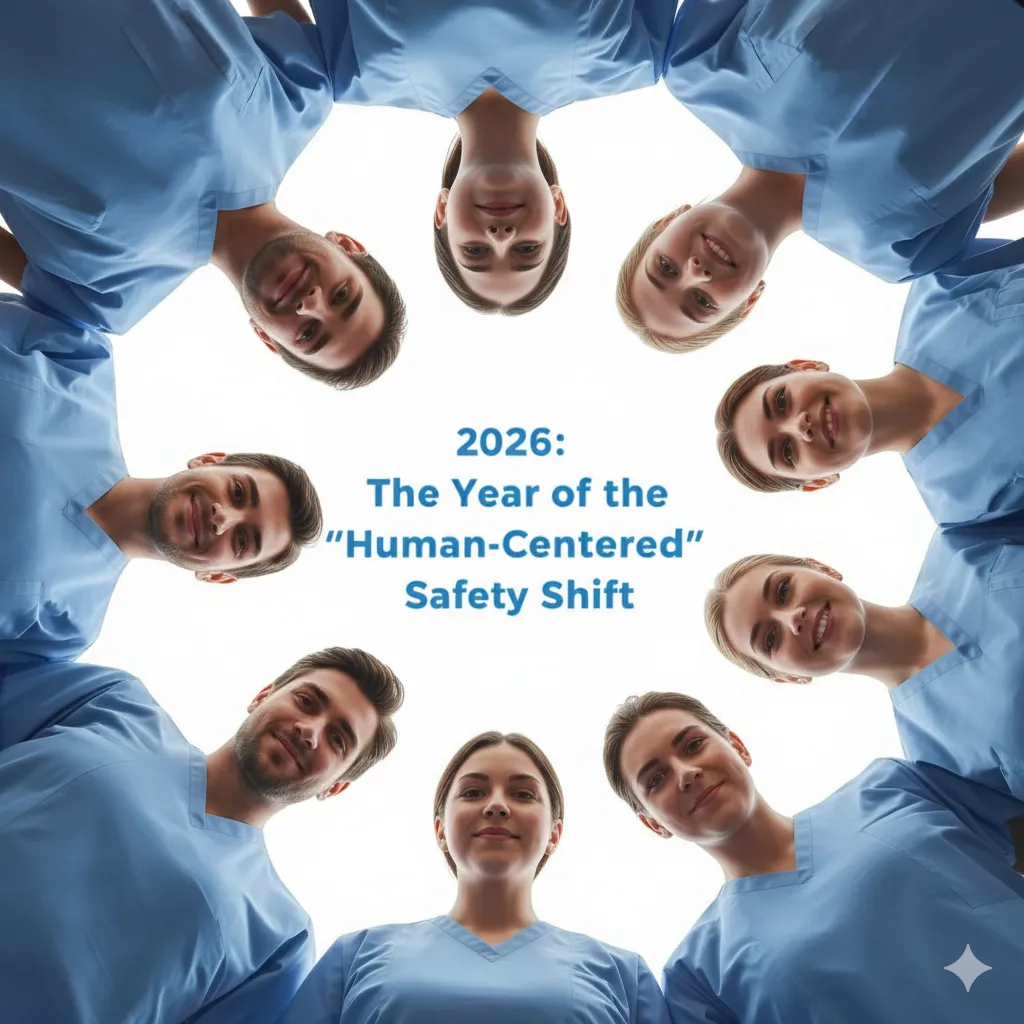
The start of a New Year is traditionally a time for reflection and recalibration. As we turn the calendar to 2026, healthcare leaders find themselves at a unique crossroads. We are emerging from a period of intense technological acceleration and workforce strain, but this year marks a significant regulatory and cultural pivot.
With over 40 years in nursing—from the bedside to the boardroom—I have seen decades of "New Year’s Resolutions" in healthcare. We’ve resolved to implement new EHRs, we’ve resolved to cut costs, and we’ve resolved to increase throughput. But in 2026, our collective resolution must be different. This must be the year we finally bridge the gap between policy and practice to create a true culture of patient safety.
The Regulatory Catalyst: NPSG 12
As of January 1, 2026, the Joint Commission has officially elevated nurse staffing to a National Performance Goal (NPG 12). This is a watershed moment. It signals that the industry finally recognizes what those of us in the trenches have known for decades: Staffing levels are not just a budgetary line item; they are a primary driver of patient mortality and morbidity.
But as leaders, we must realize that meeting a staffing ratio is only the baseline. True safety occurs in the space between the numbers—in the culture that empowers a nurse to speak up, the system that prevents a tired doctor from making a cognitive error, and the technology that supports, rather than distracts, the clinician.
When Systems Fail: Real-Life Lessons in Patient Harm
To understand where we are going, we must be honest about where we still fail. High-reliability organizations do not hide their "near-misses"; they dissect them. Consider these common, yet devastating, scenarios that still plague our halls:
The "Contextual" Medication Error: In a recent high-profile case, a patient in a medical ICU was inadvertently administered a double dose of a potent vasopressor. The unit was critically understaffed, and the nurse—rushed and interrupted—bypassed the standard barcode safety checks. The patient went into cardiac arrest and could not be resuscitated. The 2026 Solution: We must move beyond blaming the individual. The solution is Workload Redesign. By implementing "Quiet Zones" for medication prep and utilizing AI-driven predictive analytics to adjust staffing before a unit reaches a breaking point, we remove the environmental triggers that lead to human error.
The Diagnostic "Overshadow": A patient with a history of anxiety presents to the ED with shortness of breath. Because of her history, her physical symptoms are attributed to a panic attack. She is discharged, only to return 24 hours later with a massive pulmonary embolism. The 2026 Solution: This is a failure of Cognitive Bias. Leaders must champion "Diagnostic Stewardship" programs. By integrating AI-assisted decision support tools that prompt clinicians to consider "What else could this be?", we provide a safety net for the tired or biased brain.
The Communication Breakdown at Discharge: A 70-year-old patient is discharged after a complex surgery with a new medication regimen. Due to a rushed handoff, the patient continues their old medication alongside the new one, leading to a dangerous drug-drug interaction and a readmission within 48 hours. The 2026 Solution: We must shift to Integrated Patient Engagement. This means moving away from paper packets and toward interactive, tech-enabled discharge models where the patient and family are active "safety partners" in the care transition.
The 40-Year Perspective: Why Now is Different
When I started my career, "Patient Safety" wasn't a department; it was just a hope. Today, we have the data, the technology, and now the regulatory mandate to make it a reality. But technology like AI—which will be a $20 billion industry in healthcare by the end of this year—is only as good as the human culture it inhabits.
In 2026, the most successful healthcare organizations won't be the ones with the newest gadgets. They will be the ones that prioritize Psychological Safety. They will be the places where a first-year resident feels safe questioning a tenured surgeon, and where a CNA is celebrated for "stopping the line" when they see a potential fall risk.
Our Leadership Resolution for 2026
As we set our goals for this year, I challenge my fellow executives to look past the spreadsheets.
Move from Reactive to Proactive: Don't wait for a "Sentinel Event" to change a process. Use your 2025 data to find the "hot spots" in your organization today.
Invest in the "Middle": Your unit managers are the keepers of your culture. Give them the training and the emotional "headspace" to lead with empathy.
Make Safety Personal: At your next board meeting, start not with a financial report, but with a patient story—either a success or a failure. Remind your team why we do this.
Closing Thoughts
Forty years ago, I entered this profession to save lives. That mission hasn't changed, but the complexity of the task has. As we step into 2026, let’s resolve to build systems that are as resilient and compassionate as the people who work within them.
The checklist is where we start, but the culture is where we win.
What is your primary patient safety goal for 2026? Are you focusing on staffing, AI integration, or cultural transparency? Let’s discuss in the comments.
For more insights on improving patient safety and fostering effective communication in healthcare, visit Dr. Julie Siemers' website: https://drjuliesiemers.com/.
#PatientSafety #HealthcareLeadership #JustCulture #PsychologicalSafety #HighReliabilityHealthcare
2026: The Year of the "Human-Centered" Safety Shift
Date published: January 1, 2026
The start of a New Year is traditionally a time for reflection and recalibration. As we turn the calendar to 2026, healthcare leaders find themselves at a unique crossroads. We are emerging from a period of intense technological acceleration and workforce strain, but this year marks a significant regulatory and cultural pivot.
With over 40 years in nursing—from the bedside to the boardroom—I have seen decades of "New Year’s Resolutions" in healthcare. We’ve resolved to implement new EHRs, we’ve resolved to cut costs, and we’ve resolved to increase throughput. But in 2026, our collective resolution must be different. This must be the year we finally bridge the gap between policy and practice to create a true culture of patient safety.
The Regulatory Catalyst: NPSG 12
As of January 1, 2026, the Joint Commission has officially elevated nurse staffing to a National Performance Goal (NPG 12). This is a watershed moment. It signals that the industry finally recognizes what those of us in the trenches have known for decades: Staffing levels are not just a budgetary line item; they are a primary driver of patient mortality and morbidity.
But as leaders, we must realize that meeting a staffing ratio is only the baseline. True safety occurs in the space between the numbers—in the culture that empowers a nurse to speak up, the system that prevents a tired doctor from making a cognitive error, and the technology that supports, rather than distracts, the clinician.
When Systems Fail: Real-Life Lessons in Patient Harm
To understand where we are going, we must be honest about where we still fail. High-reliability organizations do not hide their "near-misses"; they dissect them. Consider these common, yet devastating, scenarios that still plague our halls:
The "Contextual" Medication Error: In a recent high-profile case, a patient in a medical ICU was inadvertently administered a double dose of a potent vasopressor. The unit was critically understaffed, and the nurse—rushed and interrupted—bypassed the standard barcode safety checks. The patient went into cardiac arrest and could not be resuscitated. The 2026 Solution: We must move beyond blaming the individual. The solution is Workload Redesign. By implementing "Quiet Zones" for medication prep and utilizing AI-driven predictive analytics to adjust staffing before a unit reaches a breaking point, we remove the environmental triggers that lead to human error.
The Diagnostic "Overshadow": A patient with a history of anxiety presents to the ED with shortness of breath. Because of her history, her physical symptoms are attributed to a panic attack. She is discharged, only to return 24 hours later with a massive pulmonary embolism. The 2026 Solution: This is a failure of Cognitive Bias. Leaders must champion "Diagnostic Stewardship" programs. By integrating AI-assisted decision support tools that prompt clinicians to consider "What else could this be?", we provide a safety net for the tired or biased brain.
The Communication Breakdown at Discharge: A 70-year-old patient is discharged after a complex surgery with a new medication regimen. Due to a rushed handoff, the patient continues their old medication alongside the new one, leading to a dangerous drug-drug interaction and a readmission within 48 hours. The 2026 Solution: We must shift to Integrated Patient Engagement. This means moving away from paper packets and toward interactive, tech-enabled discharge models where the patient and family are active "safety partners" in the care transition.
The 40-Year Perspective: Why Now is Different
When I started my career, "Patient Safety" wasn't a department; it was just a hope. Today, we have the data, the technology, and now the regulatory mandate to make it a reality. But technology like AI—which will be a $20 billion industry in healthcare by the end of this year—is only as good as the human culture it inhabits.
In 2026, the most successful healthcare organizations won't be the ones with the newest gadgets. They will be the ones that prioritize Psychological Safety. They will be the places where a first-year resident feels safe questioning a tenured surgeon, and where a CNA is celebrated for "stopping the line" when they see a potential fall risk.
Our Leadership Resolution for 2026
As we set our goals for this year, I challenge my fellow executives to look past the spreadsheets.
Move from Reactive to Proactive: Don't wait for a "Sentinel Event" to change a process. Use your 2025 data to find the "hot spots" in your organization today.
Invest in the "Middle": Your unit managers are the keepers of your culture. Give them the training and the emotional "headspace" to lead with empathy.
Make Safety Personal: At your next board meeting, start not with a financial report, but with a patient story—either a success or a failure. Remind your team why we do this.
Forty years ago, I entered this profession to save lives. That mission hasn't changed, but the complexity of the task has. As we step into 2026, let’s resolve to build systems that are as resilient and compassionate as the people who work within them.
The checklist is where we start, but the culture is where we win.
What is your primary patient safety goal for 2026? Are you focusing on staffing, AI integration, or cultural transparency? Let’s discuss in the comments.
For more insights on improving patient safety and fostering effective communication in healthcare, visit Dr. Julie Siemers' website: https://drjuliesiemers.com/.
#PatientSafety #HealthcareLeadership #JustCulture #PsychologicalSafety #HighReliabilityHealthcare
Closing Thoughts
Monitoring and Reporting
Collecting and analyzing data on safety incidents to identify trends and areas for improvement.
Establishing Standards
Developing and enforcing safety protocols to ensure consistency and quality across healthcare organizations.
Promoting Education
Providing training and resources to healthcare professionals to enhance their knowledge and skills in patient safety.
Encouraging Transparency
Creating a culture where healthcare workers feel empowered to report errors and near-misses without fear of retribution.

Driving Innovation
Leveraging technology and research to implement cutting-edge solutions for patient safety challenges.
FOLLOW US


Copyright 2025. All rights reserved
FOLLOW US
FOLLOW US