

Rural Doesn’t Mean Unprepared: The Case for Rescue Readiness
Date published: October 9, 2025
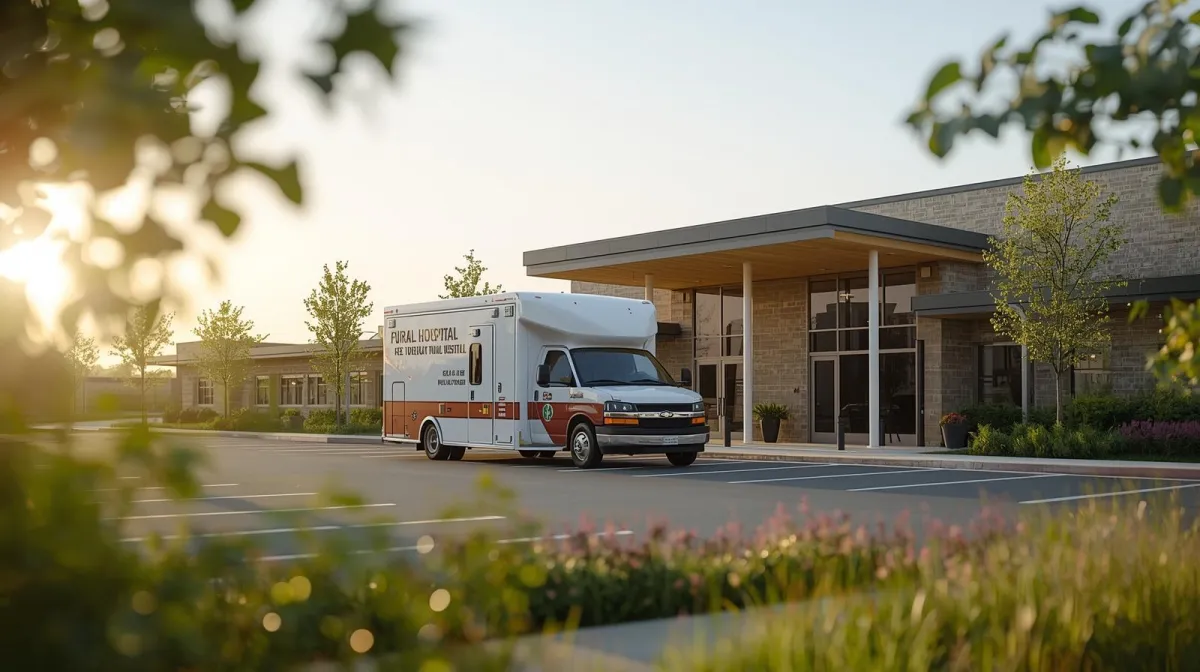
When minutes mean life, rural shouldn’t mean out of options.
Across the country, small hospitals and critical access facilities serve as the only safety net for millions of Americans. They’re often the first to see the signs of a crisis — and too often, the last stop before a preventable tragedy.
We call these moments failure to rescue — when patients deteriorate, and no one recognizes it in time to act. It’s not neglect. It’s not apathy. It’s the inevitable result of asking small teams to do the impossible: deliver high-acuity care with limited staff, limited training time, and limited resources.
And yet, there’s another story that deserves to be told — one where rural hospitals lead the way in patient safety innovation.
The Hidden Strength of Small Systems
Rural healthcare teams are built differently. They know their patients. They notice subtle shifts because they’ve often cared for the same person across years, even generations. The intimacy and continuity that urban hospitals dream of are already present in rural communities.
What’s missing isn’t commitment — it’s structure.
Large health systems have built-in rapid response teams, simulation centers, and data dashboards to track risk in real time. Most rural facilities don’t have those luxuries — but they can have the same outcomes when they adopt the same mindset: readiness over reaction.
That’s where the concept of Rescue Readiness comes in.
What “Rescue Ready” Really Means
Being rescue ready means building the skill, confidence, and coordination to act fast when a patient starts to decline — before the situation becomes life-threatening.
It’s not just about more training. It’s about teaching staff and families how to recognize early warning signs, how to escalate care effectively, and how to activate help without hesitation or hierarchy.
At its core, rescue readiness is a culture — one that says:
“If you see something, you say something — and we’ll listen.”
Introducing the Rural Rescue Readiness (R4) Model
The R4 Program was built around a simple but radical idea: every hospital, no matter how small, can become a center of excellence in early rescue.
R4 is a statewide, tiered recognition and training program designed to reduce failure-to-rescue events by 25% in one year.
It includes:
• Evidence-based early warning systems and escalation protocols
• Interprofessional simulation training for real-world scenarios
• A statewide data dashboard to track and compare performance
• Recognition tiers (Bronze, Silver, Gold) for hospitals demonstrating measurable improvement
It’s not theoretical. It’s a turnkey, grant-ready model designed for adoption through state hospital associations — and right now, it’s aligned with the $100 million CMS Rural Healthcare Transformation Grant opportunity.
The Return on Readiness
Reducing preventable deaths isn’t just good medicine — it’s smart economics.
Hospitals participating in readiness-based quality programs have reported:
• 25–40% reduction in failure-to-rescue events
• 20% faster escalation times
• 30–50% fewer ICU transfers for preventable deterioration
For a state with 30 critical access hospitals and 90 rural clinics, that translates into tens of millions in savings annually from avoided CMS penalties, reduced transfers, and improved patient outcomes.
But the real ROI is something we can’t measure on a spreadsheet — trust.
When a rural hospital becomes rescue ready, it restores public confidence. Families stop wondering whether help will come fast enough. Staff stop feeling helpless. Communities start believing that small doesn’t mean second-best.
A Call to Action
We’ve accepted for too long that rural means limited, or that small hospitals can’t meet large-system standards of care. That narrative ends here.
Readiness isn’t about geography — it’s about mindset. It’s about equipping every nurse, medic, and provider with the tools and confidence to recognize risk and act early.
Because when we prepare rural teams for rescue, we’re not just saving lives — we’re changing the definition of what’s possible in small-town medicine.
If you’re a hospital leader, policymaker, or rural health advocate, now is the time to connect. The R4 Program is ready to implement, ready to measure, and ready to prove what’s always been true: rural healthcare isn’t behind — it’s ready to lead.
Let’s make rescue readiness the new rural standard.
Read more: https://drjuliesiemers.com/the-r4-program-course-catalog
#Healthcare #PatientSafety #Health ##RescueReadiness #RuralHealth
Rural Doesn’t Mean Unprepared: The Case for Rescue Readiness
Date published: October 9, 2025
When minutes mean life, rural shouldn’t mean out of options.
Across the country, small hospitals and critical access facilities serve as the only safety net for millions of Americans. They’re often the first to see the signs of a crisis — and too often, the last stop before a preventable tragedy.
We call these moments failure to rescue — when patients deteriorate, and no one recognizes it in time to act. It’s not neglect. It’s not apathy. It’s the inevitable result of asking small teams to do the impossible: deliver high-acuity care with limited staff, limited training time, and limited resources.
And yet, there’s another story that deserves to be told — one where rural hospitals lead the way in patient safety innovation.
The Hidden Strength of Small Systems
Rural healthcare teams are built differently. They know their patients. They notice subtle shifts because they’ve often cared for the same person across years, even generations. The intimacy and continuity that urban hospitals dream of are already present in rural communities.
What’s missing isn’t commitment — it’s structure.
Large health systems have built-in rapid response teams, simulation centers, and data dashboards to track risk in real time. Most rural facilities don’t have those luxuries — but they can have the same outcomes when they adopt the same mindset: readiness over reaction.
That’s where the concept of Rescue Readiness comes in.
What “Rescue Ready” Really Means
Being rescue ready means building the skill, confidence, and coordination to act fast when a patient starts to decline — before the situation becomes life-threatening.
It’s not just about more training. It’s about teaching staff and families how to recognize early warning signs, how to escalate care
effectively, and how to activate help without hesitation or hierarchy.
At its core, rescue readiness is a culture — one that says:
“If you see something, you say something — and we’ll listen.”
Introducing the Rural Rescue Readiness (R4) Model
The R4 Program was built around a simple but radical idea: every hospital, no matter how small, can become a center of excellence in early rescue.
R4 is a statewide, tiered recognition and training program designed to reduce failure-to-rescue events by 25% in one year.
It includes:
• Evidence-based early warning systems and escalation protocols
• Interprofessional simulation training for real-world scenarios
• A statewide data dashboard to track and compare performance
• Recognition tiers (Bronze, Silver, Gold) for hospitals demonstrating measurable improvement
It’s not theoretical. It’s a turnkey, grant-ready model designed for adoption through state hospital associations and right now, it’s aligned with the $100 million CMS Rural Healthcare Transformation Grant opportunity.
The Return on Readiness
Reducing preventable deaths isn’t just good medicine — it’s smart economics.
Hospitals participating in readiness-based quality programs have reported:
• 25–40% reduction in failure-to-rescue events
• 20% faster escalation times
• 30–50% fewer ICU transfers for preventable deterioration
For a state with 30 critical access hospitals and 90 rural clinics, that translates into tens of millions in savings annually from avoided CMS penalties, reduced transfers, and improved patient outcomes.
But the real ROI is something we can’t measure on a spreadsheet — trust.
When a rural hospital becomes rescue ready, it restores public confidence. Families stop wondering whether help will come fast enough. Staff stop feeling helpless. Communities start believing that small doesn’t mean second-best.
A Call to Action
We’ve accepted for too long that rural means limited, or that small hospitals can’t meet large-system standards of care. That narrative ends here.
Readiness isn’t about geography — it’s about mindset. It’s about equipping every nurse, medic, and provider with the tools and confidence to recognize risk and act early.
Because when we prepare rural teams for rescue, we’re not just saving lives — we’re changing the definition of what’s possible in small-town medicine.
If you’re a hospital leader, policymaker, or rural health advocate, now is the time to connect. The R4 Program is ready to implement, ready to measure, and ready to prove what’s always been true: rural healthcare isn’t behind — it’s ready to lead.
Let’s make rescue readiness the new rural standard.
Read more: https://drjuliesiemers.com/the-r4-program-course-catalog
#Healthcare #PatientSafety #Health ##RescueReadiness #RuralHealth
Monitoring and Reporting
Collecting and analyzing data on safety incidents to identify trends and areas for improvement.
Establishing Standards
Developing and enforcing safety protocols to ensure consistency and quality across healthcare organizations.
Promoting Education
Providing training and resources to healthcare professionals to enhance their knowledge and skills in patient safety.
Encouraging Transparency
Creating a culture where healthcare workers feel empowered to report errors and near-misses without fear of retribution.

Driving Innovation
Leveraging technology and research to implement cutting-edge solutions for patient safety challenges.
FOLLOW US


Copyright 2025. All rights reserved
FOLLOW US
FOLLOW US